CHESSBOOKS.IN JOURNAL
The Fork: Chess’s Most Common Tactic
The fork is the most common tactic in chess, and for good reason: every piece can make one, and the damage it does is immediate. One knight attacks two pieces at once; your opponent saves one and loses the other. Whole games at club level turn on a single fork.
By the end of this article you’ll know what a fork is, which pieces fork best, how to spot a fork before it happens to you — and how to create them in your own games.
What a fork is
A fork (or double attack) is a single move where one piece attacks two or more enemy pieces at the same time. Because your opponent can only move one piece per turn, a genuine fork wins material — unless the targets are defended well enough to cover each other.
The three fork weapons
- The knight — the classic. Knights attack squares no other piece can reach, which makes their forks the hardest to spot and the most common. A knight on a central square attacks eight squares at once.
- The queen. The queen’s long-range power lets her fork two rooks, a rook and a king, or a piece and a mate threat from across the board.
- The king. A king can fork too — usually in the endgame, attacking two pawns or a pawn and a piece. And pawns fork beautifully: a pawn advancing to attack a king and a piece is a classic beginner’s weapon.
Fork targets ranked
When you calculate a fork, rank the targets: king first, then queen, then rooks, then minor pieces. A fork with check is the strongest kind, because the opponent must answer the check and can’t defend the second target in the same move.
Two worked examples
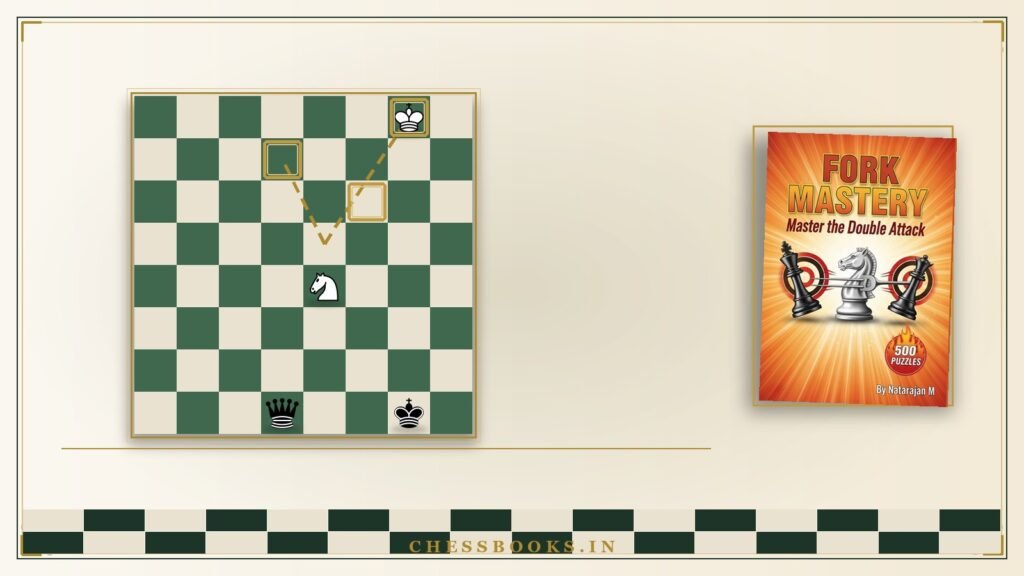
The knight fork. Black: king e8, queen d7. White: knight g4, king e1. White to move: 1.Nf6+! The knight gives check on the king and attacks the queen on d7 at the same time. The king must move — it can’t capture the knight — and next move 2.Nxd7+ collects the queen. Check first, fork second.
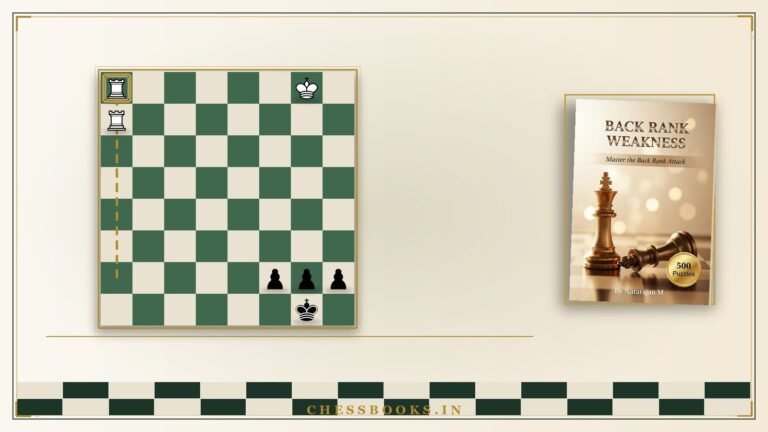
The queen fork. Black: king e8, rook a8. White: queen c4, king e1. White to move: 1.Qc8+! The queen checks along the 8th rank and attacks the rook on a8 at the same time. The king must step off the line, and 2.Qxa8 wins the whole rook. One check, one rook.
Creating forks: check first, fork second
Forks rarely appear by luck. They appear after forcing moves drag enemy pieces onto squares where your next move forks them. The pattern is: give check or threaten a big piece first, and let your opponent’s forced reply walk into the fork. Loose pieces — undefended pieces sitting on forking squares — are your best invitation.
Common mistakes
- Forking defended pieces. A fork wins nothing if both targets are defended and the exchange is equal. Calculate the recaptures.
- Missing that the forked piece can capture back. Before you fork, check whether either target can simply take the forking piece.
- Forking for the sake of it. A knight fork that wins a pawn is good; one that loses the knight is not. Compare the gain against what you invested.
- Forgetting pawns can fork. A pawn stepping up to attack a king and a rook is often overlooked — and it’s often the cheapest fork on the board.
Four fork exercises
Find the fork in each position before opening the answer.
Answer
1.Nf6+! Check on e8 and attack on d7. The king moves, then 2.Nxd7+ wins the queen.
Answer
1.Nd6+! Check on e8 and attack on f7. After the king moves, 2.Nxf7+ takes the rook with check.
Answer
1.Qc8+! Check on e8, attack on a8. The king moves, then 2.Qxa8 wins the rook.
Answer
1.Nf6+! The knight checks the king and attacks both the queen on d7 and the rook on h7. After the king moves, one of them falls. That’s the fork in its purest form.
Train 500 forks until the pattern is automatic
One motif, repeated deeply, builds recognition faster than a hundred mixed puzzles. Fork Mastery — Master the Double Attack gives you 500 fork positions to grind the pattern down cold, and Tactics Vol 1 covers forks alongside pins, skewers and discovered attacks for a complete basic-tactics course.
Find more chess tactics books, and next in this series: pins and skewers — the quiet relatives of the fork that win just as much material.