CHESSBOOKS.IN JOURNAL
Basic Checkmates Every Beginner Must Know
Every beginner has been there: you’ve won a queen, your opponent has only a king left, and you can’t finish the job. Then — worst case — you stalemate and turn a won game into a draw. Basic checkmates are the first technique every chess player must know by heart, because they end more games than any opening trick ever will.
By the end of this article you’ll be able to mate with king and queen, king and rook, two rooks, and the back-rank mate — and you’ll know exactly how to avoid the stalemate traps that rob beginners of half their wins.
Why learning the mates by heart matters
Mating technique is pattern memory. You don’t want to rediscover the king-and-queen mate in a blitz game — you want your hands to know it. Once the basic mates are automatic, converted wins stop being a coin flip.
King + queen vs king: the box method
With king and queen against a lone king, your queen alone can’t mate — the enemy king can capture it if it isn’t protected. The plan has three steps:
- Shrink the box. Use the queen to cut off ranks and files, keeping it a knight’s move from the enemy king so it can’t be captured.
- Bring your king up. Walk your king to within a knight’s move of the enemy king. The queen does the covering; the king does the protecting.
- Mate on the edge. Drive the king to the edge of the board and deliver the protected mate.
Example: White king f1, queen e1; Black king d5. 1.Qe5+ cuts the board and drives the black king toward the edge (1…Kc6 or 1…Kc4). Bring the white king up, then finish as in Exercise 1 below.
King + rook vs king: cut the rank
With king and rook, the king does the real work: it cuts off the rank or file the enemy king wants to escape to, while the rook delivers the checks. Drive the enemy king to the edge, step your king opposite it, and let the rook give the final check from the side.
The two-rook ladder mate
Two rooks mate a lone king without their own king’s help. The rooks take turns: one checks and drives the king down, the other waits on the next rank to cut off the escape. It’s the fastest way to finish a won position when you’re up two rooks — see Exercise 3.
The back-rank mate
The back-rank mate is the one that happens to you before you learn anything else: your king is castled behind unmoved pawns, the back rank is undefended, and a rook or queen lands on the 8th rank with check. The escape squares are gone because your own pawns stand in the way. Making luft — pushing h3 or g3 — is the standard precaution.
Stalemate: the number one beginner error
Stalemate is the draw that feels like a win. It happens when you squeeze the enemy king so hard it has no legal move — but you forgot to give check. A position with no legal moves and no check is stalemate: the game is drawn. The classic shape is a king in the corner with the queen too close. The rule is simple: always deliver check at the end, and keep one flight square open until you do.
Common mistakes
- Stalemating. The #1 beginner error. When in doubt, give check.
- Bringing the king too late. The queen or rook can’t mate alone; your king must join the attack.
- Checking without purpose. Wandering checks let the enemy king dance back to the centre. Cut off ranks, don’t chase.
- Forgetting the back rank. Even in the endgame, an open back rank can turn your win into a mate against you.
Five mating exercises
Answer
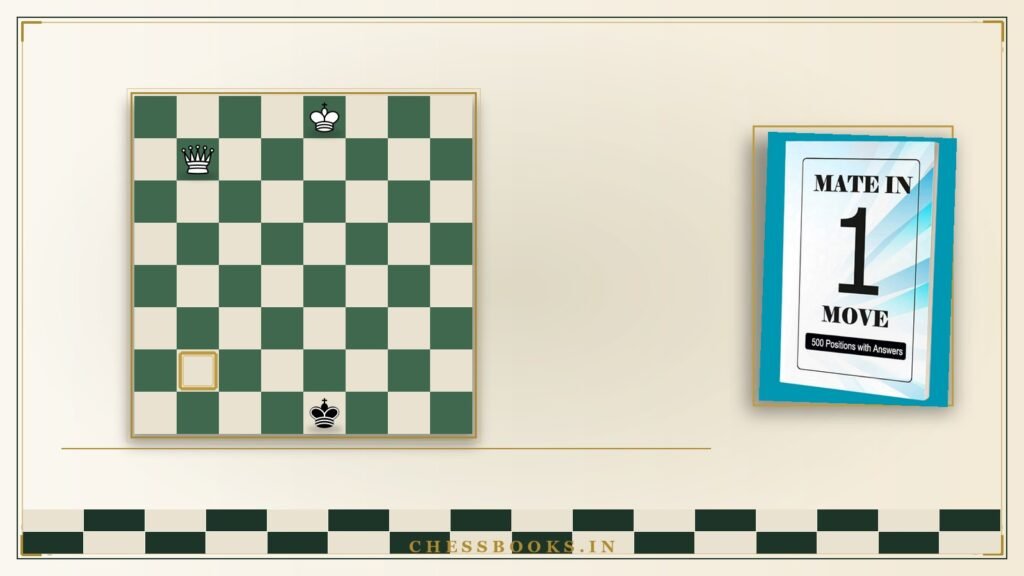
1.Qg8#. The queen gives check on g8, protected by the king on f7. The black king can’t take it, and g7 and h7 are covered. This is the box method’s finish.
Answer
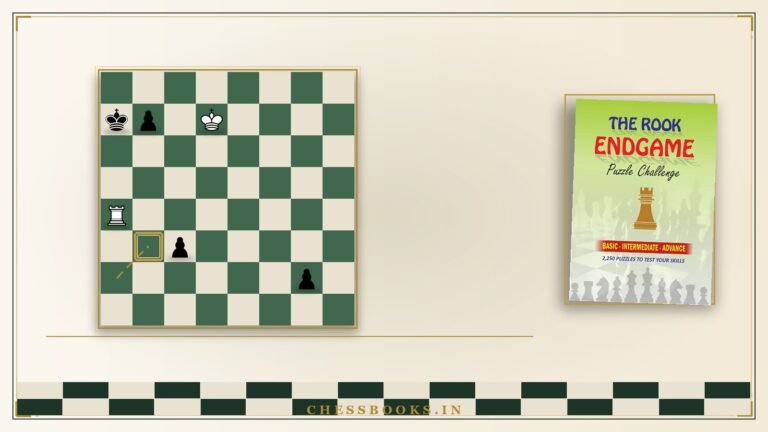
1.Rf8#. The rook checks on f8; the white king on g6 covers h7. The king can’t approach the rook, and g8 is controlled.
Answer
1.Rb8#! The b6 rook lands on the 8th rank with check; the a7 rook seals the 7th. That is the two-rook mate: one covers the escape rank, the other delivers the check.
Answer
Stalemate — draw. No legal moves, no check. White should first bring the king up (1.Kg6 or 1.Kf7), then deliver the protected mate with check — never squeeze away the last flight square without one.
Answer
1.Ra8#. The rook lands on the 8th rank with check. The king’s flight squares f8 and h8 are covered along the rank, and its own pawns block the 7th. Now make luft in your own games before this happens to you.
Practise the exact patterns that end games
The fastest way to make these mates automatic is repetition on simple positions. Mate in One Move gives you 500 checkmate patterns at exactly the right level — the mating shapes behind every finish you just learned — and 1001 Chess Endings for Beginners builds the full beginner endgame course around them.
Explore more chess books for beginners, and next in this series: the basic mate patterns of king and queen and king and rook — and how to pick your first chess book.