CHESSBOOKS.IN JOURNAL
Rook Endgames: The Lucena and Philidor Positions
Rook endings are the most common endgame in chess — and the most feared, because they seem to take forever. But underneath the shuffling, every rook ending is one of two patterns: the Lucena position (a win) or the Philidor position (a draw). Learn these two and the endless-looking rook endings become clear.
By the end of this article you will recognise both patterns and have four rook endings to practise converting.
The Philidor position: the drawing fortress
The Philidor is the defender’s lifeline. The defender’s king stands in front of the pawn, and the rook keeps its distance on the third rank (or sixth, for the defender of a rook-pawn structure). The rule: when the pawn advances to the 7th, the rook drops to the first rank and gives perpetual checks from behind.
The key move to memorise: the defender’s rook goes to the 3rd rank and waits. When the attacker’s pawn advances, then the rook goes to the 8th rank for checks. Doing this at the right moment is the entire drawing technique.
The Lucena position: the winning method
The Lucena is the attacker’s prize: a passed pawn on the 7th rank, protected by its king, with the defender’s king cut off. The win is a famous manoeuvre — the building a bridge:
- Bring the rook to the 4th rank, between the kings.
- Walk the king out from in front of the pawn.
- When the defender’s rook checks, step in front of the pawn, protected by your own rook.
- The pawn promotes.
Every rook-ending manual teaches the Lucena because it comes up constantly — a won game is not won until the bridge is built.
When neither pattern fits: activity first
Most rook endings are neither Philidor nor Lucena — they are in-between, and the rule is simple: the active rook wins. The rook belongs on the 7th rank, attacking pawns from behind, or cutting the enemy king off on a file. Passive rooks lose; active rooks draw and win.
In these positions the winning idea is concrete: cut the king off, support the passer, or switch to checks. Recognise the pattern, then execute.
Common mistakes
- Playing the Philidor at the wrong moment. The third-rank defence works only while the pawn has not reached the 7th. Too early or too late and the fortress collapses.
- Forgetting the bridge in the Lucena. Walking the king out without the rook’s protection loses the pawn.
- Passive rook defending. Rooks defend from behind and from the side — never from in front of their own pawns.
- Rushing. Rook endings reward patience. One imprecise check and the win evaporates.
Turn the patterns into instinct
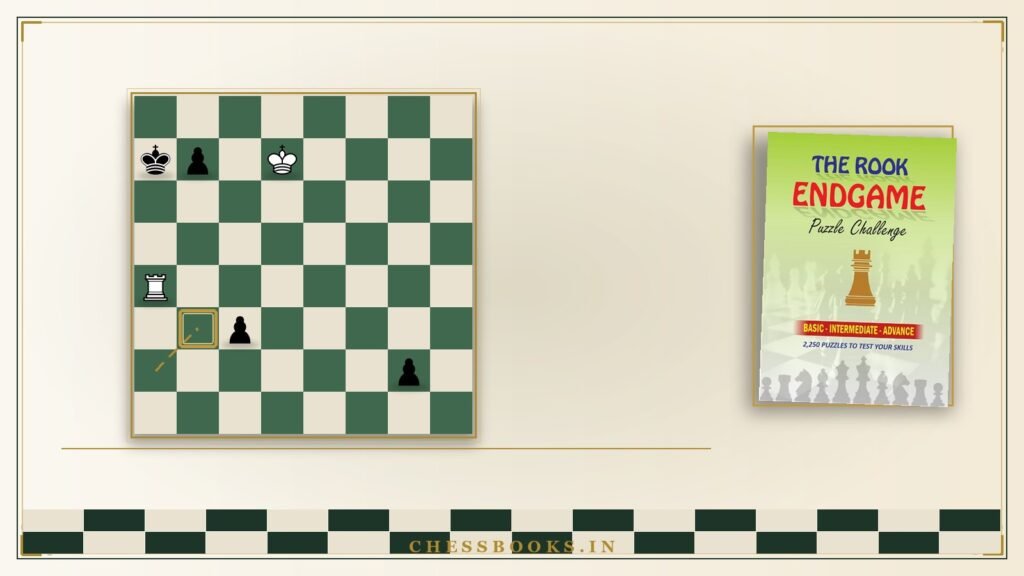
The Rook Endgame Puzzle Challenge contains 2,250 rook-ending positions, including full sets on the Lucena and Philidor, from basic to complex. Volume is the only way these patterns become automatic.
Browse the chess endings collection, and continue with Opposition: The Heart of Pawn Endings — the other foundation of endgame technique.