CHESSBOOKS.IN JOURNAL
Deflection and Decoy: Luring Pieces Away
Every tactic has a victim, and the victim is usually a piece doing too much work: guarding the back rank, covering the mate square, defending the queen. The tactics of deflection and decoy are how you make that overloaded piece abandon its post.
By the end of this article you will know the difference between the two ideas and have five interactive puzzles where the winning move is a lure.
Deflection vs decoy
They sound alike but work differently:
- Deflection — drag a defender away from the square it guards. You force the piece to leave its post, and the target it was covering falls.
- Decoy — lure a piece onto a bad square, where it becomes the victim of the next move.
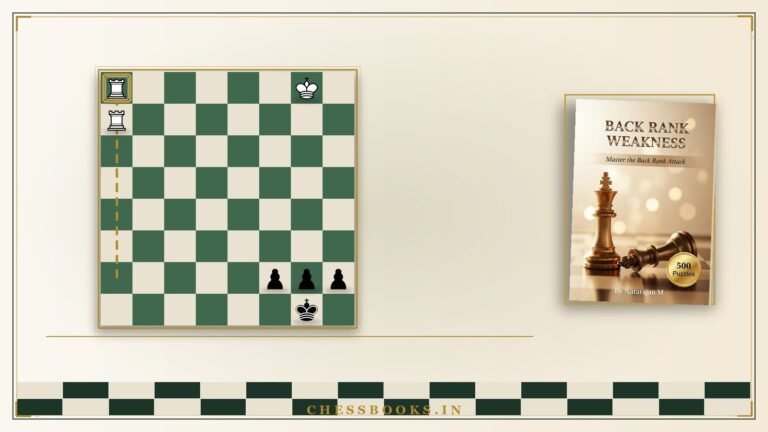
The classic deflection target is the back-rank guard. The defender protects the only escape square; remove it, and the mate appears.
Deflect the knight guard
The knight on d7 is the only piece that can block the 8th-rank corridor. The queen’s check forces it to f8 — and the rook takes it, delivering mate. The knight was doing one job: guarding g8. The moment it stepped away, the mate appeared.
Deflect the bishop
The bishop can block on either e8 or f8 — it has a choice. But both choices lead to the same rook capture and the same mate. When you deflect a piece that can block on two squares, the pattern still works because the mating structure stays intact.
Deflect the queen
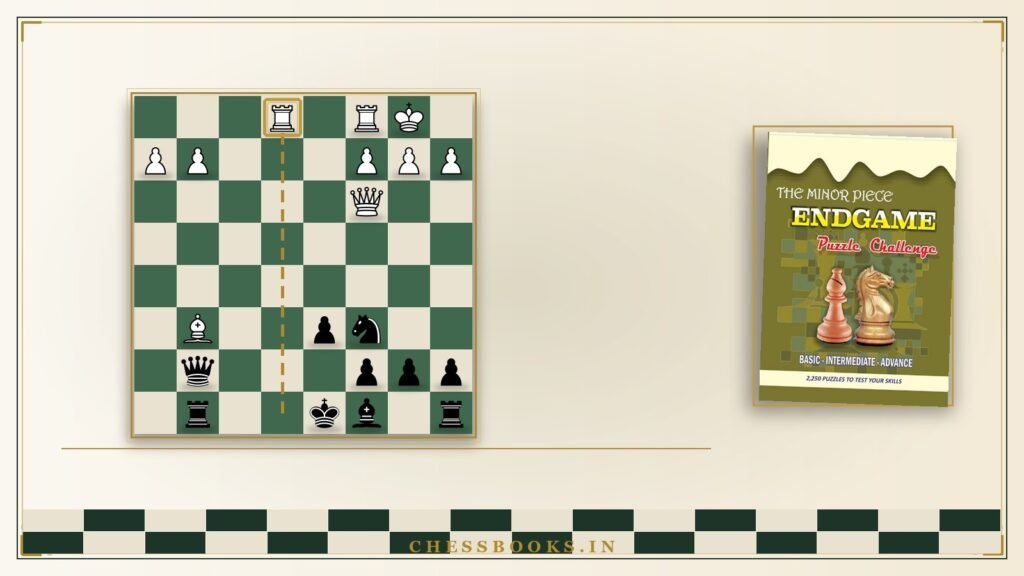
Queens are the best defenders — and therefore the best deflection targets. An overloaded queen can guard, block or capture — but it cannot do all three.
Here the queen on e7 can capture the rook, block on e8, or block on f8. Every option loses: capture is met by 2.Qxd8#, blocking by 2.Rxe8# or 2.Rxf8#. Three defences, three mates.
The decoy in action: king skewer
Deflection works on defenders; decoys work on the king itself. Drag the king onto a square where the piece behind it falls.
1.Qg8+! — the black king must leave the d-file (1…Ke7 is forced; every other square loses to the same idea), and the rook behind it is exposed: 2.Qxd8+. The king was decoyed off the file, and the rook fell.
Common mistakes
- Deflecting a piece that has nothing to protect. The lure only works when the piece is genuinely overloaded — otherwise it just declines.
- Forgetting the deflection can be declined. Checks are the safest lures because the defender cannot ignore them.
- Stopping after the lure. A deflection is a means, not an end. Always have the follow-up ready.
- Confusing decoy and deflection. Decoy lures onto a square; deflection lures away from one. Both are removal of a defender.
Practise the lures
The Deflection: 500 Tactical Chess Puzzles workbook is a full course on exactly this family — deflection, decoy, and the overloaded-piece patterns — from simple to sneaky.
Browse the chess tactics collection, and pair it with Discovered Attacks and Discovered Checks — the other great “hidden attack” family.