CHESSBOOKS.IN JOURNAL
Mate in Two: The Thought Process
Mate-in-one is pattern recognition; mate-in-two is where calculation begins. The puzzle forces you to think one move deeper: your check, your opponent’s forced reply, and the finish. That extra half-move of depth is exactly what separates beginners from improvers.
By the end of this article you will have a repeatable thought process for mate-in-two, and five interactive puzzles to apply it on.
The thought process
When you face a mate-in-two, work in this order:
- Scan the king’s escapes. Where can the enemy king go right now? Every mate-in-two begins with understanding the escape squares.
- Look for the defender. What piece is covering the key escape square? That piece is the target of your first move.
- Find the forcing first move. A check or a capture that drags the defender away from its post.
- Verify the second move mates. After the forced reply, your next move must cover every remaining escape.
The most common mate-in-two pattern is the deflection: the enemy piece that guards the back rank is forced to leave — by a capture, a check, or a bigger threat.
Deflect the guard
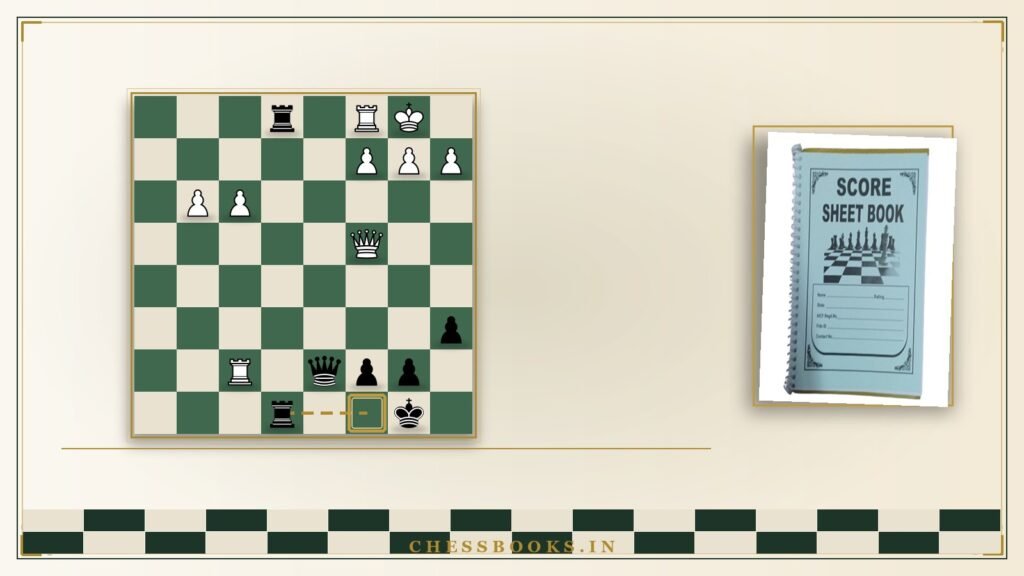
White’s first move 1.Rxd8+! forces the a8 rook to capture, removing the back-rank guard. Then the second rook delivers 2.Rxd8#. The black king has no squares: f8 and h8 are covered, the pawns block the rest.
Notice the structure of the idea: capture a defender, force the recapture, then the mate works because the guard is gone.
The corridor mate
When the king is trapped behind its own pawns, the “corridor” — the open rank in front of it — is the mating lane. Any piece that slides along it mates, if the escape squares are covered.
Here the queen slides to the 8th rank with check. The knight on d7 is the only piece that can block — and the queen simply captures it on f8 with mate. The knight’s guard duty (covering g8) ends the moment it steps onto the corridor.
When the block is captured
Same idea, new defender: the bishop on e7 must block the check on f8 or e8, and the rook takes whichever square it chooses. Two different black replies, the same mate — because the structure of the position does the work, not the specific piece.
Two warm-ups
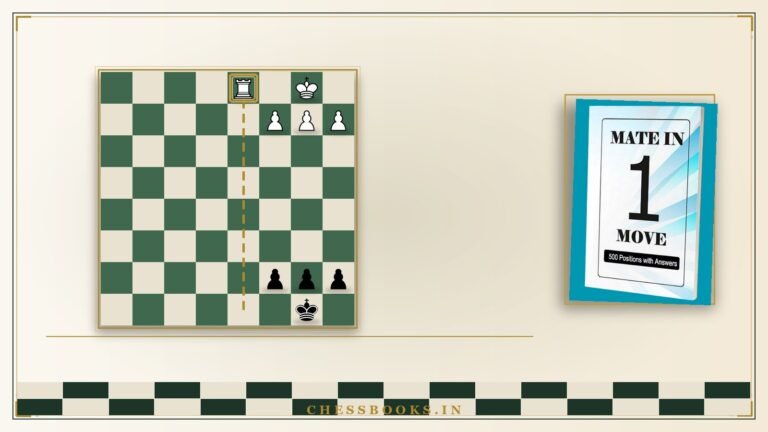
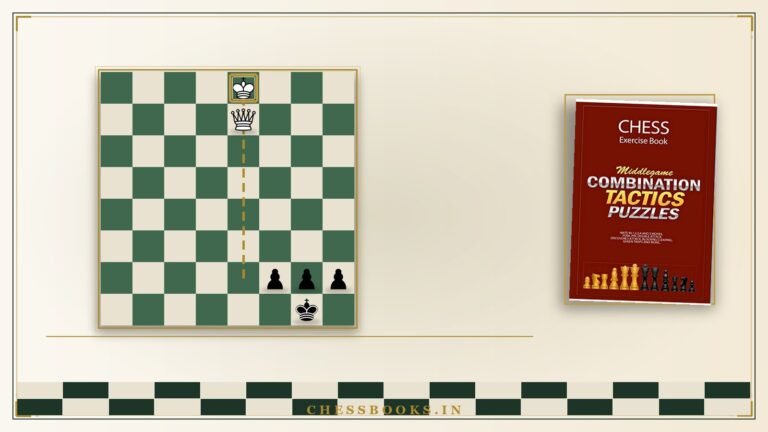
Before the full puzzles, two one-move finishes to lock in the corridor pattern:
Common mistakes
- Checking with the wrong piece. The first check must also cover the escape squares — otherwise the king just steps out.
- Forgetting the defender’s other squares. A piece that can block on two squares must be checked for both.
- Moving the pawns. The pawns are the king’s cage — leave them alone.
- Stopping at the first check. The thought process is two moves deep. Count to the mate before you commit.
Level up
The Mate in Two Moves book contains 500 puzzles arranged from simple to tricky, all built on the patterns above. Ten minutes a day of mate-in-two is the cheapest depth training in chess.
Browse more chess exercise books, and when mate-in-two feels easy, step up to Mate in Three and Beyond.