CHESSBOOKS.IN JOURNAL
The Mind’s Eye: Holding a Position Without a Board
Watch a strong player calculate and you will see the same thing every time: they stare at the board, but their eyes are not moving. The position they are working on is not on the board — it is in their head. Holding and updating a position mentally is the “mind’s eye”, and it is the most trainable of all chess skills.
By the end of this article you will know the memory anchors that make it possible, and have four positions to hold without a board.
What “holding a position” really means
Holding a position is not photography. Nobody sees all 32 pieces at once — and they do not need to. The skill is selective: hold the pieces that matter, and update them as the line plays out. A strong player holding a tactic in mind is tracking the attacking pieces, the defenders, and the squares around the king — maybe six to ten pieces, not thirty-two.
That is why the skill is trainable: it is not “memorise the board”, it is “track the relevant pieces through a sequence”.
The memory anchors
Three anchors make the mental board stable:
- Coordinates. You cannot hold a square you cannot name. The instant a piece moves, name its new square out loud (silently, with practice).
- Clusters. Remember pieces in relation to each other — “the knight covers f5, the pawn blocks g6, the queen defends both” — not as isolated dots.
- The update. After every half-move, rebuild the picture from the previous one. The update is the skill; the memory is the by-product.
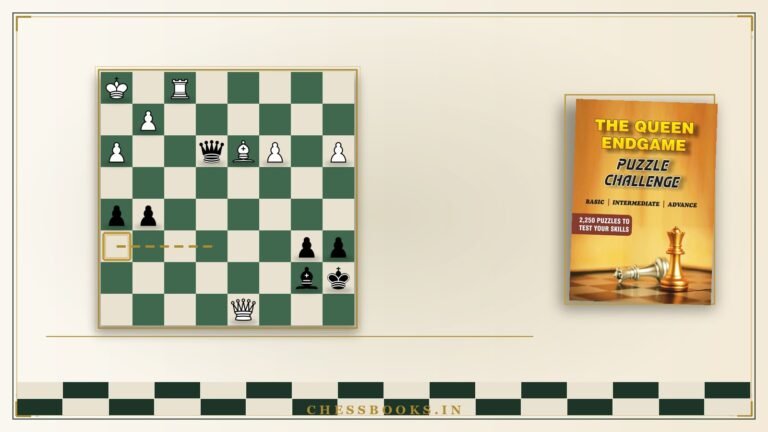
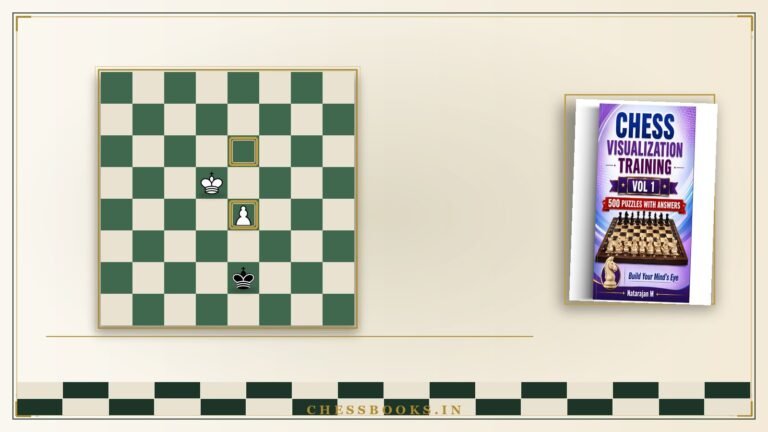
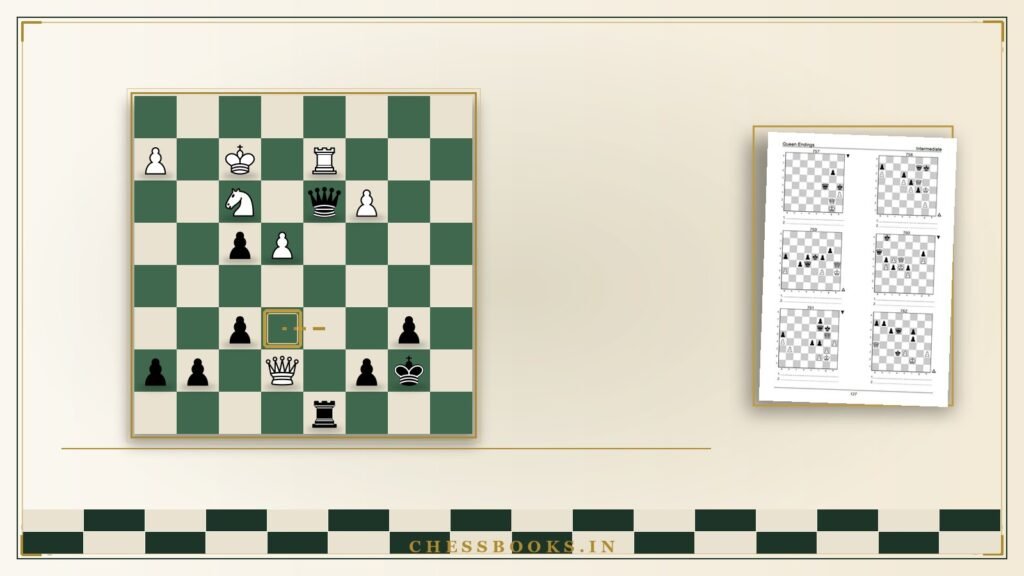
Try it now: look at the first board below for ten seconds. Close your eyes. Play the first move in your head. Name the new position of every piece that moved. That single exercise is 80% of the method.
Hold the line
These four positions are chosen for the exercise: set them up, close the book (or your eyes), and replay the line aloud before you look at the solution.
Common mistakes
- Holding too much. Twenty pieces in your head is how the picture collapses. Track the relevant six and let the rest be background.
- Never updating. The picture must be rebuilt after every move. A stale mental board is worse than no board.
- Silent, vague squares. “Somewhere over there” is not holding a position. Name the squares.
- Giving up at the first collapse. Losing the picture mid-line is normal — go back two moves and rebuild. The rebuild is the training.
Build the mind’s eye
Chess Visualization Training — Volume 3 is the next rung: 500 puzzles where you reconstruct middlegame positions mentally, from simple 2-move holds to full sequences. Start where it is hard but possible — that is the working zone.
Browse the visualization training series, and see the same skill from the other side in Chess Visualization: What It Is and How to Train It.