CHESSBOOKS.IN JOURNAL
How to Calculate in Your Head: A 5-Step Method
Every player has had the experience: you calculate a line to its end, play it, and only then notice the move you never considered. Calculation is not about seeing further — it is about organising what you already see. This article gives you a five-step method that turns scattered thoughts into reliable lines.
By the end you will have the method, plus four puzzles where the point is to calculate — not guess.
The five steps
- List the candidates. Before calculating anything, name 2-4 candidate moves. This prevents the “first move that looks good” trap.
- Mark the forcing moves. Checks, captures and threats first — they constrain the opponent’s replies, which makes calculation reliable.
- Replay to the end. Play the line in your head, including your opponent’s best replies. Rebuild the board picture after every half-move.
- Verify the end. Count the material, check the king safety, confirm the point of the line still stands.
- Commit. If the line is sound, play it without second-guessing. Wobbling is how players miss the good move they already found.
Step 2 is the key
Most calculation errors come from skipping step 2. A forcing move — a check, a capture, a mate threat — limits your opponent’s choices to a handful, and a handful is calculable. Quiet moves are where lines branch out of control. Calculate the forcing lines first; the quiet ideas come later.
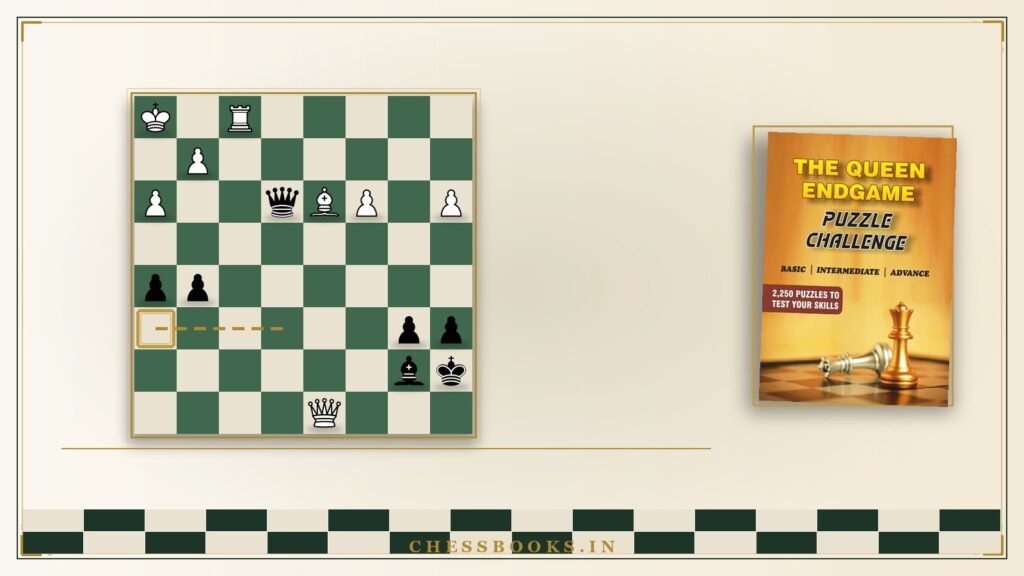
In a position like this, the check narrows everything: one reply, then the mate. That is the whole method compressed — a forcing move, a short list of replies, a verified finish.
Practise with the method
Solve these four puzzles deliberately: write down the candidates, mark the forcing moves, replay each line to its end, and only then move a piece. The puzzles get progressively deeper — the point is the discipline, not the answer.
Common mistakes
- Calculating without candidates. You cannot organise what you never listed. Name the moves first.
- Forgetting the opponent’s best reply. If your line only works against your opponent’s worst move, it is not a line.
- Deep-but-narrow thinking. One 8-move line that dies at the end is worse than three 3-move lines that survive.
- Skipping verification. The blunder is usually in the final position, not the first move.
Train the method
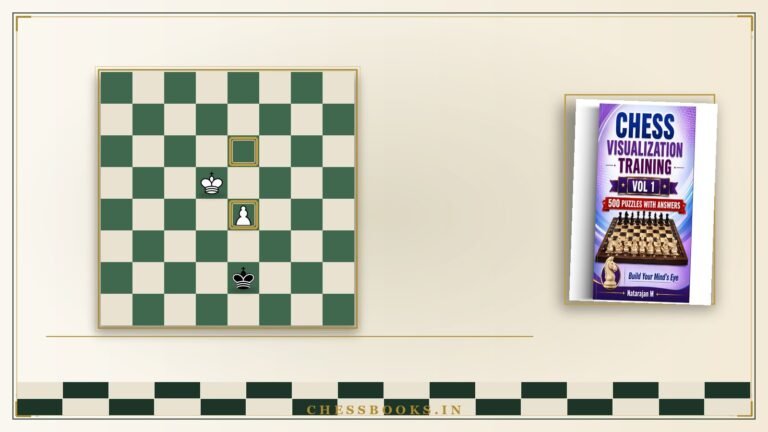
Chess Visualization Training — Volume 2 is built for exactly this: 500 puzzles where you play three transition moves in your head before touching the board. It turns the five-step method from a technique into a habit.
Browse the visualization training series, and see the bigger skill in Chess Visualization: What It Is and How to Train It.