CHESSBOOKS.IN JOURNAL
Blindfold Chess for Regular Players: Start Without a Board
Blindfold chess sounds like a superpower — and that is exactly why most players never try it. But blindfold play is not a memory trick; it is a method. If you can name a square, you can hold a few pieces in your head. And holding pieces in your head is the skill behind real calculation.
By the end of this article you will have a concrete starting method — coordinates, then 2-3 pieces, then a short sequence — and four easy puzzles to practise on without touching the board.
Start with coordinates
Blindfold chess is impossible without the alphabet of squares: files a-h, ranks 1-8, and the instant picture of where each square sits. Before anything else, drill this: name the square, then its colour, then which pieces stand on it. Thirty seconds of this daily compounds fast.
Your first mental target is a single piece. Place a knight on d4 in your mind. Where can it go? (c2, e2, f3, f5, e6, c6, b5, b3 — the eight squares of the knight’s circle.) Can you see them without a board? That is the whole game, scaled down.
The 2-3 piece rule
Now add pieces. The standard beginner exercise: set up a position with two or three pieces, look at it for ten seconds, then close your eyes and replay a short line aloud, naming every square.
The trick is to verbalise. Saying “knight d4 takes f5, the pawn takes back on f5” out loud forces your brain to update the mental board — which is exactly the skill calculation needs.
Easy blindfold puzzles
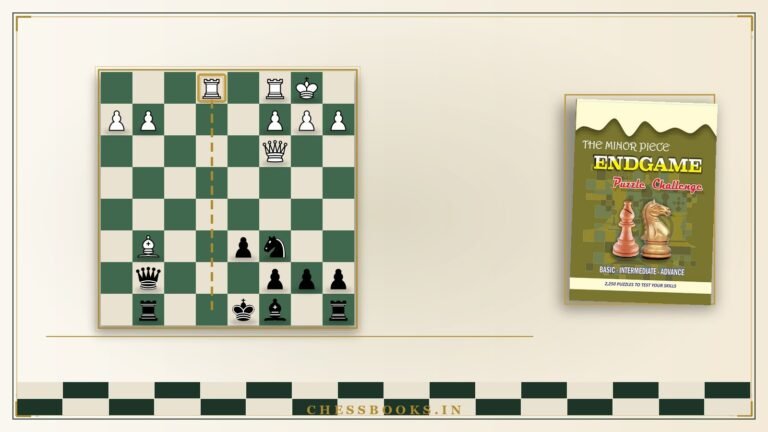
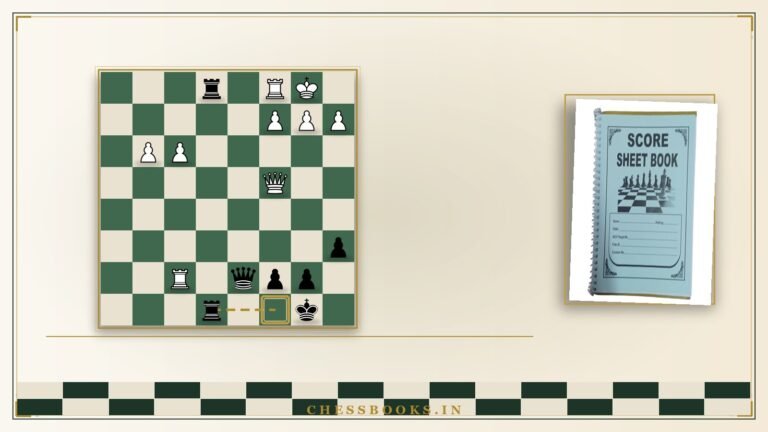
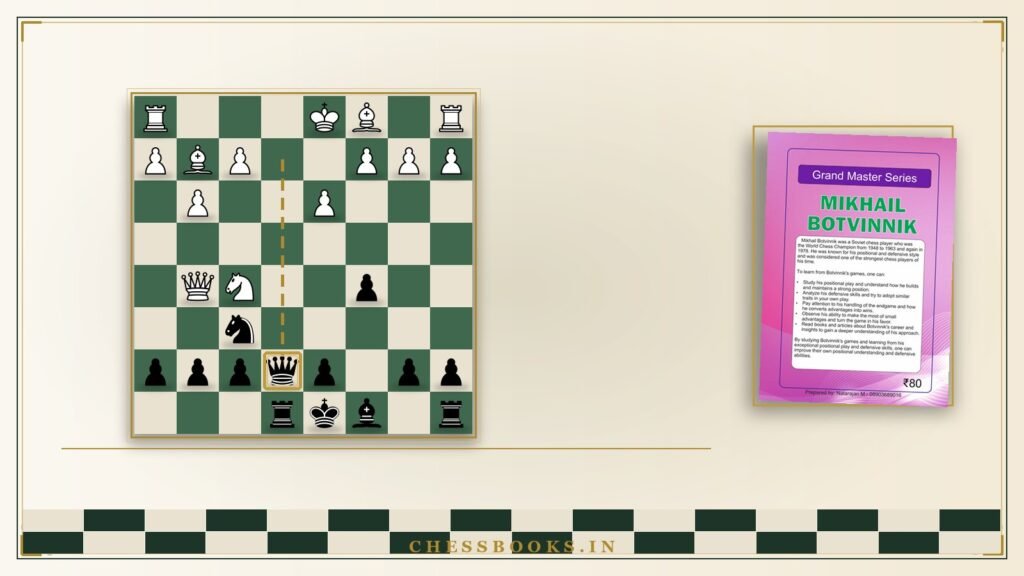
Here is the method in practice. Solve these on paper or in your head — do not move pieces. Each is simple enough that the first move is findable with coordinates alone:
For each one: name the target, name the square it sits on, and name the move that wins it. If you can do that without a board, you are playing blindfold chess at Level 1.
Common mistakes
- Starting too big. Trying to hold a full middlegame on day one guarantees failure. Two pieces, then three, then a sequence.
- Silent solving. Naming squares out loud is not a crutch — it is the training. Skip it and the mental board stays vague.
- Rushing the update. After every move, pause and rebuild the picture. The update, not the memory, is the skill.
- Quitting at the first failure. Losing the picture mid-line is normal. Go back two moves and rebuild.
The next rung
Blindfold Chess Training — Level 1 is a full course on this exact method: coordinates first, then tracking 1-3 pieces through simple lines, with 500 puzzles built in increasing difficulty. When Level 1 feels easy, The Blindfold Training Ladder shows the whole path to Level 5.
Browse the blindfold training series, and see why this matters for normal play in Chess Visualization: What It Is and How to Train It.